logo
ホーム ニュース

会社のニュース Selection Comparison Between Mining Bits and Oil & Gas Bits

認証
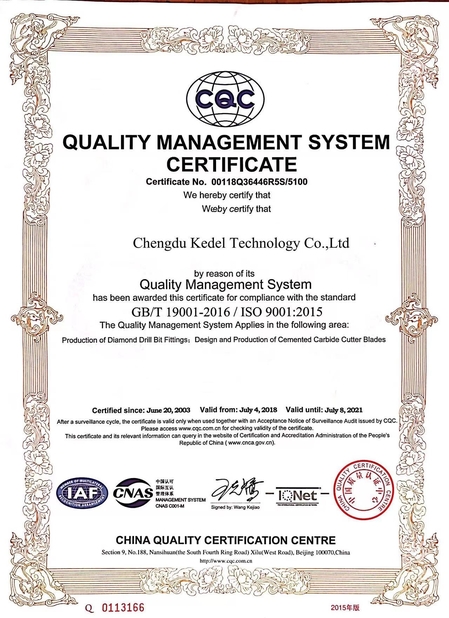
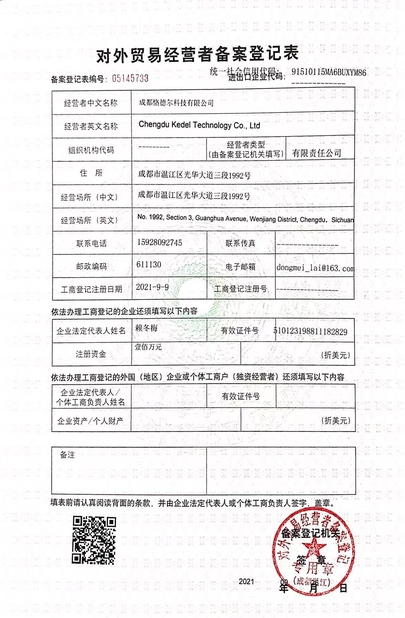
中国 Chengdu Kedel Technology Co.,Ltd 認証
顧客の検討
ケデル・ツールの販売は とてもプロフェッショナルで 忍耐強く 商品を受け取った時 カービッドナイフの品質は 期待を超えています我々は,我々の協力を維持し,製品を再購入し続けます長期間のパートナーシップを期待しています

—— エミリア・バッチンスカ

非常に友好的な工場で,あらゆる問題を及時に対処するのに役立ちます. 引数は非常に迅速で,スタッフは非常に友好的です. 共に働くことは心配なく,楽しいです.

—— スーザン・ガーネット

非常に友好的な工場で,あらゆる問題を及時に対処するのに役立ちます. 引数は非常に迅速で,スタッフは非常に友好的です. 共に働くことは心配なく,楽しいです.

—— Kamlesh Patel

高コストで効率的な製品 プロフェッショナルなサービス 迅速な輸送 ケデル・ツールは私が知っている最も信頼性の高い会社です

—— Andrey Skutin

オンラインです
会社 ニュース
Selection Comparison Between Mining Bits and Oil & Gas Bits
最新の会社ニュース Selection Comparison Between Mining Bits and Oil & Gas Bits

As core tools in the drilling field, both mining bits and oil & gas bits use tungsten carbide as the core material (to ensure hardness and wear resistance). However, due to differences in application scenarios, formation characteristics, and operational requirements, there are significant distinctions in their selection logic. Mining drilling often faces fractured formations and gravel-containing working conditions, prioritizing impact resistance and stability; oil & gas drilling mainly deals with continuous formations, emphasizing high-efficiency drilling and long service life to reduce tripping times. Selecting the right bit type and material specifications directly affects operational efficiency and costs—incorrect selection may lead to premature bit wear, sticking, or even equipment failure. This article uses clear tables and plain language to compare key dimensions, bit types, and selection steps, helping industry practitioners quickly match scenarios with bits and improve selection accuracy.

1. Comparison of Core Selection Dimensions (At a Glance)

Comparison Dimension Key Focus for Mining Bit Selection Key Focus for Oil & Gas Bit Selection
Formation Characteristics Mostly fractured formations, gravel-containing/fracture-developed formations with a wide hardness range (soft clay → hard granite) and poor stability Mostly continuous formations (soft clay → tight shale → hard crystalline rock) with strong formation integrity and a large depth range (shallow → ultra-deep)
Core Operational Requirements Adaptability to complex geology, impact resistance, low failure rate; on-site quick maintenance (e.g., replacing tungsten carbide teeth) in some scenarios High-efficiency drilling, long service life, resistance to high temperature and pressure (ultra-deep wells), compatibility with high-pressure drilling fluid circulation systems
Mainstream Bit Types Roller cone bits (60% market share, impact-resistant), PDC bits (30% market share, high-efficiency in medium-hard formations), diamond bits (specialized for hard rock) PDC bits (70% market share, high-efficiency in continuous formations), roller cone bits (25% market share, complex surface layers), diamond bits (hard rock in ultra-deep wells)
Tungsten Carbide Material Requirements Emphasis on toughness (high cobalt content, e.g., YG15) to withstand impact loads and prevent tungsten carbide tooth chipping Emphasis on wear resistance + high-temperature resistance (fine-grain tungsten carbide, e.g., YG6X) combined with diamond composite layers (PDC teeth) for high-speed cutting
Specification Preferences Small-to-medium diameter (6-17½ inches), short bit body design to enhance torsion resistance Medium-to-large diameter (8½-20 inches), long bit body + multi-nozzle layout to improve cooling and cuttings removal efficiency
Maintenance & Cost Logic Convenient maintenance (on-site replacement of tungsten carbide teeth), low single cost, acceptance of frequent replacements High maintenance cost (requires professional grinding equipment), pursuit of long service life (replaced after a single drilling operation) to reduce comprehensive costs
Common Failure Types Tungsten carbide tooth chipping, bit body deformation, sticking PDC tooth wear/falling off, nozzle clogging, bearing failure (roller cone bits)

2. Selection Differences of Mainstream Bit Types (Targeted Adaptation)

2.1 Roller Cone Bits: A "Universal" Choice for Both Scenarios, but with Different Emphases

Roller cone bits are a common choice for both mining and oil & gas due to their strong impact resistance, but their adapted scenarios are clearly differentiated:

  • Mining Scenarios: Prioritized for underground coal mining and metal ore drilling (fractured formations, gravel-containing working conditions). Tungsten carbide teeth with high cobalt content (YG15) are selected to enhance impact resistance, and roller cone bearings are thickened to reduce wear;
  • Oil & Gas Scenarios: Mainly used for surface and middle-layer drilling (soft-to-medium hard continuous formations). Fine-grain tungsten carbide teeth (YG8) are chosen to improve wear resistance, combined with a multi-nozzle layout to optimize cooling and cuttings removal, adapting to high-pressure drilling fluid.

2.2 PDC Bits: "High-Efficiency Main Force" for Oil & Gas, "Specific Adaptation" for Mining

PDC bits (tungsten carbide substrate + diamond composite layer) are known for high cutting efficiency but weak impact resistance, with obvious selection differences:

  • Mining Scenarios: Only suitable for large mine shaft drilling and coalbed methane extraction (continuous medium-hard formations without gravel). PDC teeth with thick diamond layers and thickened bit bodies are selected to avoid tooth chipping caused by impact from fractured formations;
  • Oil & Gas Scenarios: Core tool for high-efficiency drilling of shale gas and tight oil wells (continuous formations). Fine-grain tungsten carbide substrates + wear-resistant diamond layers are used, adapting to high-speed cutting (linear speed ≥200m/min) with a service life 2-5 times that of roller cone bits.

2.3 Diamond Bits: "Specialized Tools" for Hard Rock, Strict Scenario Restrictions

Diamond bits (tungsten carbide substrate + diamond particles) have extremely high hardness and are only suitable for hard rock working conditions:

  • Mining Scenarios: Hard rock drilling of metal ores (granite, basalt) and geological exploration coring. Synthetic diamond particles are selected to enhance impact resistance and prevent diamond falling off caused by broken rock blocks;
  • Oil & Gas Scenarios: Hard formations in ultra-deep oil & gas wells (crystalline rock). Natural diamonds or high-end composite diamonds are used to adapt to high temperature and pressure (bottom hole temperature ≥150℃), pursuing precise drilling and long service life.

2.4 Drag Bits: Only Suitable for Soft Formations, "Economical Supplement" for Both Scenarios

Drag bits have a simple structure and are only used for soft formations (clay, loose sandstone). The selection logic is consistent, but specifications differ:

  • Mining Scenarios: Small water wells and shallow mine stripping. Small diameters (4-8 inches) are selected, with thickened tungsten carbide edges to handle a small amount of fine gravel;
  • Oil & Gas Scenarios: Surface soft formation drilling of oil & gas wells (surface clay, sand layers). Medium-to-large diameters (8½-12¼ inches) are chosen, with a multi-nozzle design to improve cuttings removal efficiency and quickly complete surface drilling.

3. Key Selection Steps: 3-Step Quick Matching (Mining vs. Oil & Gas)

Step 1: First Judge Formation Characteristics (Core Basis)

Formation Type Mining Selection Recommendations Oil & Gas Selection Recommendations
Soft Formations (clay, sand layers) Drag bits (economical) or roller cone bits (stable), with tungsten carbide teeth emphasizing wear resistance Drag bits (surface layers) or PDC bits (high-efficiency), multi-nozzle design to improve cuttings removal efficiency
Medium-Hard Formations (sandstone, limestone) Roller cone bits (impact-resistant) or PDC bits (high-efficiency), moderate tungsten carbide content (YG8/YG10) PDC bits (main force), fine-grain tungsten carbide + diamond composite layers for high-speed cutting
Hard Rock Formations (granite, basalt) Diamond bits (specialized), high-toughness tungsten carbide substrate Diamond bits or high-end PDC bits, high-temperature resistant tungsten carbide material for ultra-deep well high-temperature conditions
Fractured/Gravel-Bearing Formations Roller cone bits (only suitable), thickened tungsten carbide teeth + reinforced bearings Avoid PDC bits; select roller cone bits (complex surface formations) and switch to PDC bits later

Step 2: Clarify Core Operational Requirements

  • Mining Scenarios: For large-scale mining (e.g., coal mine stripping), prioritize roller cone bits (stable with low failure rate); for hard rock coring (e.g., metal ore exploration), select diamond bits;
  • Oil & Gas Scenarios: For high-efficiency shale gas drilling, select PDC bits (long service life + high speed); for ultra-deep hard rock wells, select diamond bits; for fractured surface formations, use roller cone bits as a transition.

Step 3: Balance Cost and Efficiency

  • Mining Scenarios: Limited budget, complex working conditions → roller cone bits (low maintenance cost, replaceable tungsten carbide teeth); pursuit of efficiency, continuous formations → PDC bits;
  • Oil & Gas Scenarios: Pursuit of low comprehensive cost → PDC bits (long service life, reduced tripping); hard rock specialized operations → diamond bits (expensive but irreplaceable).

4. Typical Application Case Comparison (Intuitive Reference)

Application Scenario Recommended Bit Type Tungsten Carbide Material Requirements Selection Logic
Underground Coal Mining (fractured sandstone) Roller cone bit (6-8½ inches) YG15 (high cobalt content, strong toughness) Impact-resistant, preventing tungsten carbide tooth chipping, adapting to complex formations
Metal Ore Hard Rock Drilling (granite) Diamond bit (8½ inches) Ultra-fine grain tungsten carbide substrate Ultra-high hardness to handle hard rock grinding, ensuring core integrity
Shale Gas Drilling (continuous tight shale) PDC bit (8½ inches) YG6X (fine grain, wear-resistant) High-efficiency cutting, long service life, reducing tripping times
Oil & Gas Well Surface Drilling (clay sand layers) Drag bit (12¼ inches) Tungsten carbide inlaid edges Rapid drilling, low cost, adapting to soft formation cuttings removal
Ultra-Deep Oil & Gas Wells (hard crystalline rock) Diamond bit (17½ inches) High-temperature resistant tungsten carbide Resistant to high temperature and pressure, high efficiency in hard rock breaking

Conclusion: The Core of Selection is "Scenario Matching", and Material is "Performance Guarantee"

The selection of mining bits and oil & gas bits essentially balances "formation characteristics + operational requirements + cost budget": mining prioritizes "impact resistance and stability", with roller cone bits as the core choice and tungsten carbide materials emphasizing toughness; oil & gas prioritizes "high efficiency and long service life", with PDC bits as the main force and tungsten carbide materials emphasizing wear resistance and high-temperature resistance.

As a tungsten carbide industry practitioner, it is recommended to first clarify the customer's core scenario (mining/oil & gas), formation report, and operational requirements when recommending bits, then match the bit type and tungsten carbide material specifications (e.g., cobalt content, grain size). For complex working conditions (e.g., gravel-containing oil & gas surface layers, continuous hard rock mining drilling), customized tungsten carbide cutting components can be provided to balance impact resistance and wear resistance.

If you need to recommend precise bit models and tungsten carbide configurations for specific scenarios (e.g., fractured formations in a coal mine, tight formations in a shale gas field), please contact us for customized solutions to help improve operational efficiency and reduce operation and maintenance costs.

パブの時間 : 2025-12-13 11:49:29 >> ニュースのリスト
連絡先の詳細
Chengdu Kedel Technology Co.,Ltd

コンタクトパーソン: Mrs. Lilian

電話番号: +86 159 280 92745

ファックス: 86-028-67230808

私達に直接お問い合わせを送信 (0 / 3000)